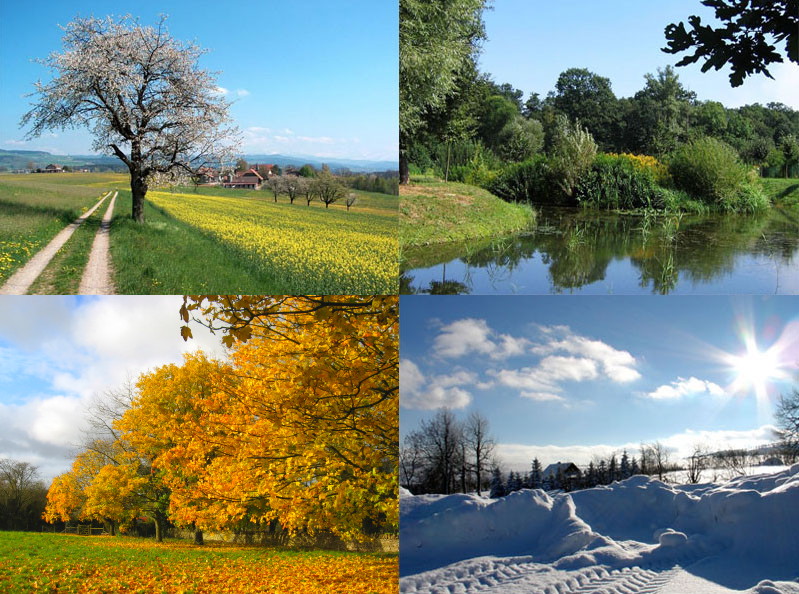
Some important lines and points on Earth's surface are determined by the astronomical relationship between Earth and the sun. The location of these points and lines is determined by the way sunlight strikes Earth's surface during various seasons of the year.
The equator, for example, is the midpoint between the North Pole and the South Pole. It is also the point at which the sun rises at 6:00 AM and sets at 6:00 PM (solar time) every day of the year.
All places on Earth's surface receive six months of daylight and six months of darkness each year, but they accumulate these totals according to very different patterns of light and darkness. The equator gets 12 hours of daylight every day, summer or winter - six months of daylight over the course of a year. The North Pole gets its six months of daylight all at once followed by six months of darkness. Where you live, are the summer days much longer than the winter days? The farther north or south of the equator you live, the greater will be the seasonal difference.
Key Notes:
- Equator: mid-point between North and South Pole
- Equator's solar time is 6:00 am sun rises - 6:00 pm sun sets.
- All Earth's surface receives 6 months of light and 6 months of darkness
- North Pole receives all light and darkness at once
- The further from the equator - the greater difference in seasons
- Solar Time: time kept or measured by the sun

No comments:
Post a Comment